This week an idea came up that I couldn’t let go of, and it came from my own eyes.
For more than a year my left eye has seen things slightly wrong. It started with a retina problem called central serous chorioretinopathy. That part has healed, but it left a mark: near the centre, straight lines bend, and the whole image from my left eye sits a little lower and to the right of what my right eye sees. With both eyes open, I see double.
What that looks like
A presenter on TV with four eyes. A car at night with four headlights.
The hard part is explaining it. My doctor asks what I see, my wife asks what it’s like, and I end up waving my hands. “Lines bend a bit, near the middle, sort of down” doesn’t help anyone picture it.
One evening I asked Claude to draw an Amsler grid so I could check my eye. It’s the simple chart eye doctors use: a square of 20 by 20 lines with a dot in the middle. A Swiss eye doctor, Marc Amsler, described it in 1945. Held at reading distance, each square covers about one degree of your central vision, so a bent line tells you roughly where the problem is.
Then I asked if I could change the grid until it matched what my left eye sees. While doing that I noticed two things I had never put into words: a faint grey patch, and white that looks less white in that eye.
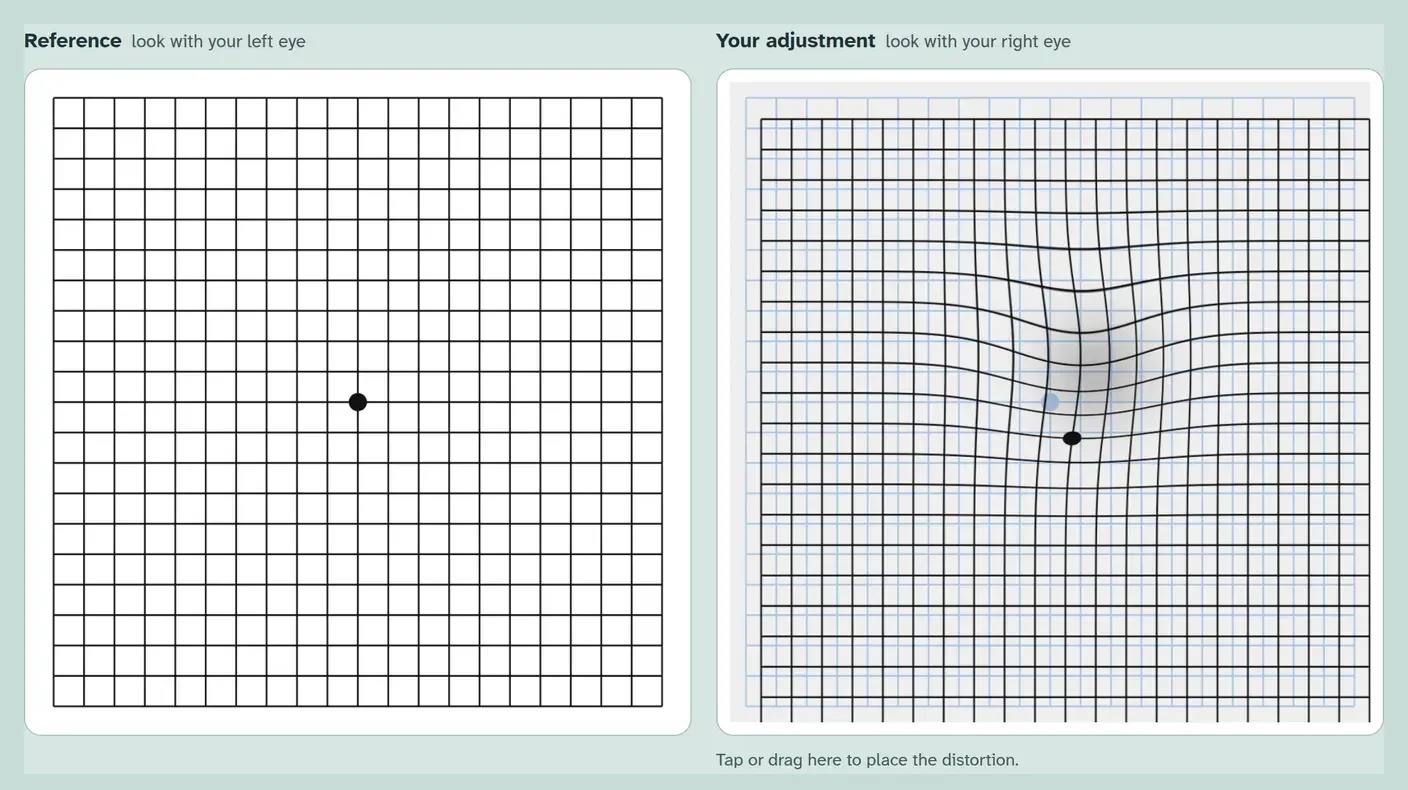
From there it grew fast. You adjust one eye at a time while looking with the other, with a faint normal grid underneath so it’s easier to match. You can save the result, which meant my wife could try it too. And then the part I wanted most: both eyes put on top of each other, on the grid and on real scenes.
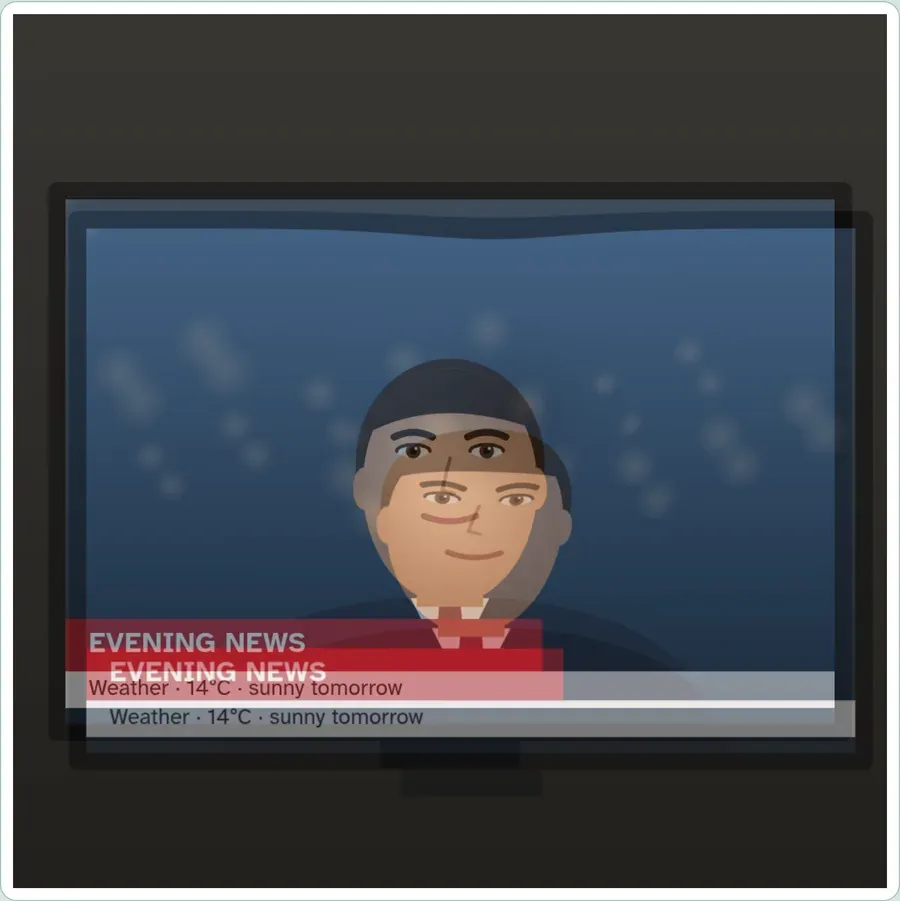
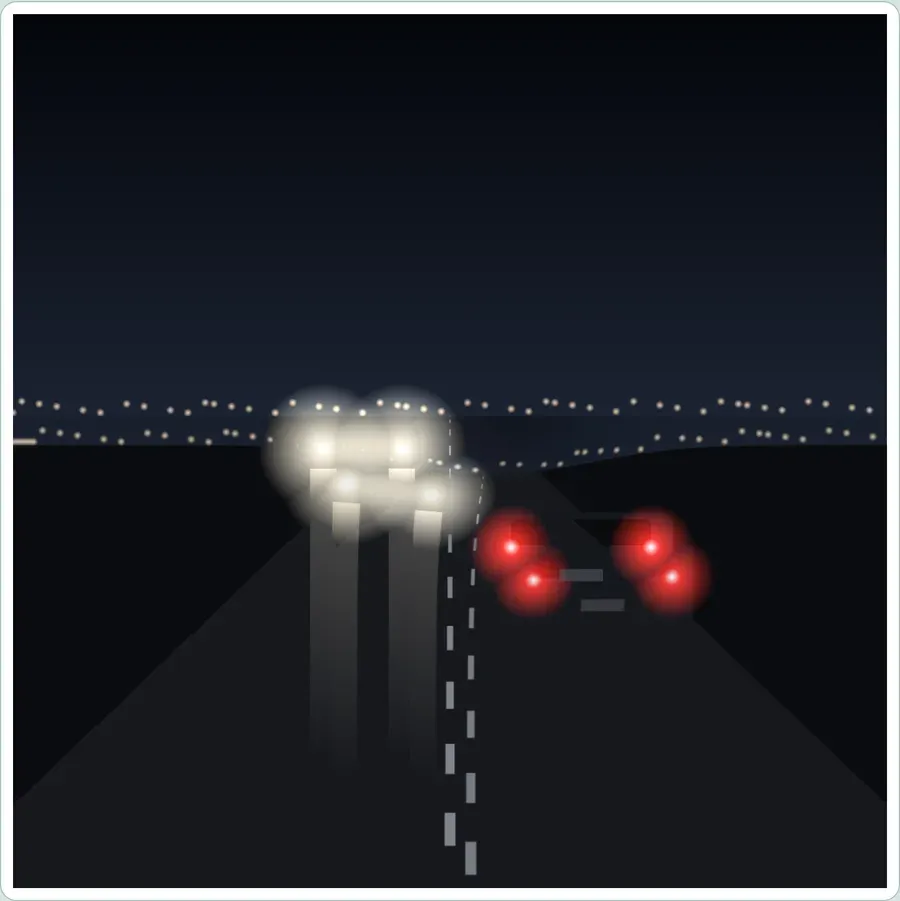
The next day I put it online as amslerview, in English so anyone can use it. If you or someone close to you sees bent lines or double, you can try it at amslerview.pages.dev. It takes about five minutes, and you can download the result as an image to show your eye doctor.
It’s free, with no sign-up. Because this is health data, nothing leaves your browser: no tracking, and results are saved only on your own device. It also isn’t a medical test, and the site says so. It’s a way to show other people what you see.
The takeaway
When a symptom is hard to describe, let people change a picture until it looks right. It says more than any description.